A Brief History of Geotechnical Engineering
Long before geotechnical engineering existed as a formal discipline, builders were already grappling with its central problem: how to build safely on ground that could not always be trusted. Ancient civilizations developed practical, hard-won techniques for dealing with unstable soil, even without the scientific tools to explain why those techniques worked.
Early Empirical Solutions
Ancient Egyptian, Roman, and Mesopotamian builders used methods like soil compaction, timber pile foundations, and layered fill to improve unstable ground, largely through trial, observation, and accumulated experience rather than formal theory. The leaning of structures like the Tower of Pisa, which began tilting during construction in the 12th century due to soft, uneven subsoil, is a well-known historical reminder of how much a structures fate depends on the ground beneath it, and how limited the eras understanding of soil behavior still was.
The Birth of Soil Mechanics
Geotechnical engineering as a scientific discipline began to take shape in the 18th and 19th centuries. French engineer Charles-Augustin de Coulomb contributed foundational work on soil shear strength and earth pressure in the late 1700s, laying groundwork that engineers still reference today. Over the following century, researchers across Europe continued to develop theories around soil pressure and slope stability, gradually shifting the field from pure craft toward applied science.
The real turning point came in the early 20th century with the work of Karl Terzaghi, an Austrian engineer widely regarded as the father of modern soil mechanics. Terzaghis research in the 1920s introduced systematic, testable methods for understanding how soil consolidates, deforms, and supports load, most notably through his theory of consolidation. His 1925 publication on soil mechanics is often cited as the point at which the field gained a rigorous scientific foundation, moving it decisively beyond rule-of-thumb practice.
Growth Through the 20th Century
Following Terzaghis work, geotechnical engineering expanded rapidly as a formal field of study. Universities began offering dedicated coursework, professional societies formed, and standardized testing methods were developed to bring consistency to soil investigation and analysis. Large infrastructure projects throughout the century created growing demand for engineers who specialized specifically in subsurface conditions.
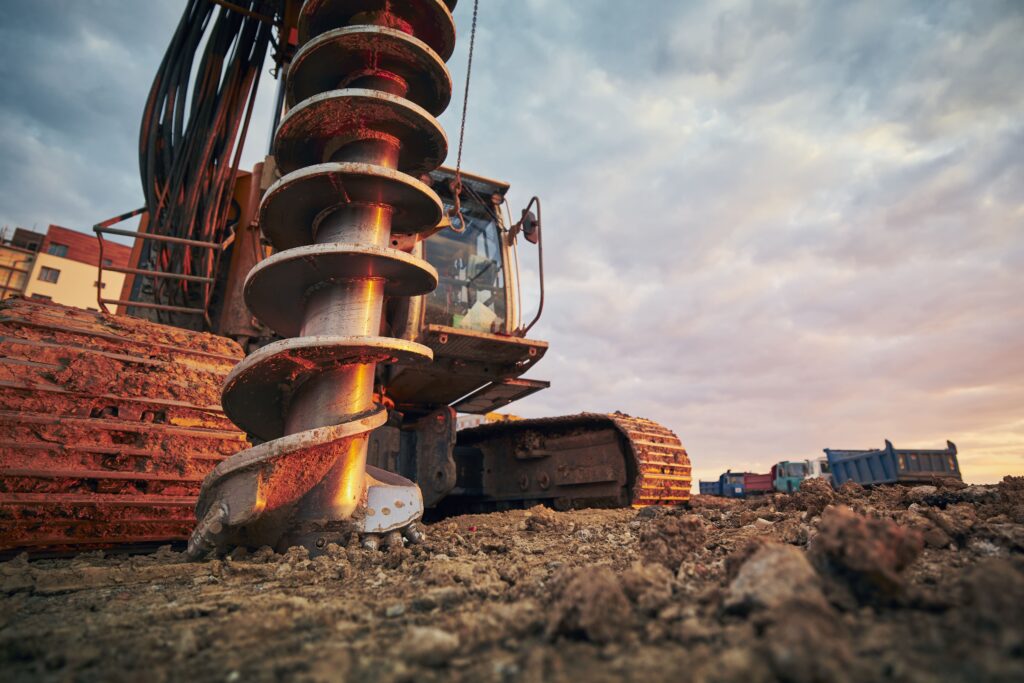
Advances in drilling technology, laboratory testing, and eventually computer modeling further transformed the field, allowing engineers to analyze complex soil behavior with far greater precision than earlier generations could manage by hand calculation alone.
Geotechnical Engineering Today
Modern geotechnical engineering combines the empirical lessons of centuries of construction with rigorous scientific method. It remains a field defined by uncertainty and variability, no two sites are identical, but todays engineers have far more sophisticated tools for investigating, modeling, and designing for the ground conditions they encounter.
Read more on our geotechnical engineering education site.