What Is Geotechnical Engineering?
Geotechnical engineering is the branch of civil engineering concerned with the behavior of soil and rock, and how that behavior affects the design of structures built on or in the ground. In practical terms, it is the discipline that answers a question every construction project depends on: will the ground beneath this structure support it safely, both today and decades from now?
Why the Ground Matters
No structure exists in isolation from the earth beneath it. A skyscrapers foundation has to distribute enormous loads into the soil and rock below without excessive settling. A retaining wall has to resist the pressure of soil pushing against it. A highway embankment has to remain stable through wet seasons, freeze-thaw cycles, and years of traffic. In every case, the ground itself is part of the engineering problem, not just the surface the project sits on.
Soil and rock are far less predictable than steel or concrete. Two sites a few hundred feet apart can have completely different subsurface conditions, one might be dense, well-draining sand, while the other is soft, compressible clay prone to settling under load. Geotechnical engineers exist to characterize these differences and design accordingly.
What Geotechnical Engineers Study
The field draws on several interconnected areas:
- Soil mechanics – how soil behaves under stress, how it drains, and how it deforms over time.
- Rock mechanics – the strength and stability of rock masses, particularly relevant for tunnels, slopes, and foundations on bedrock.
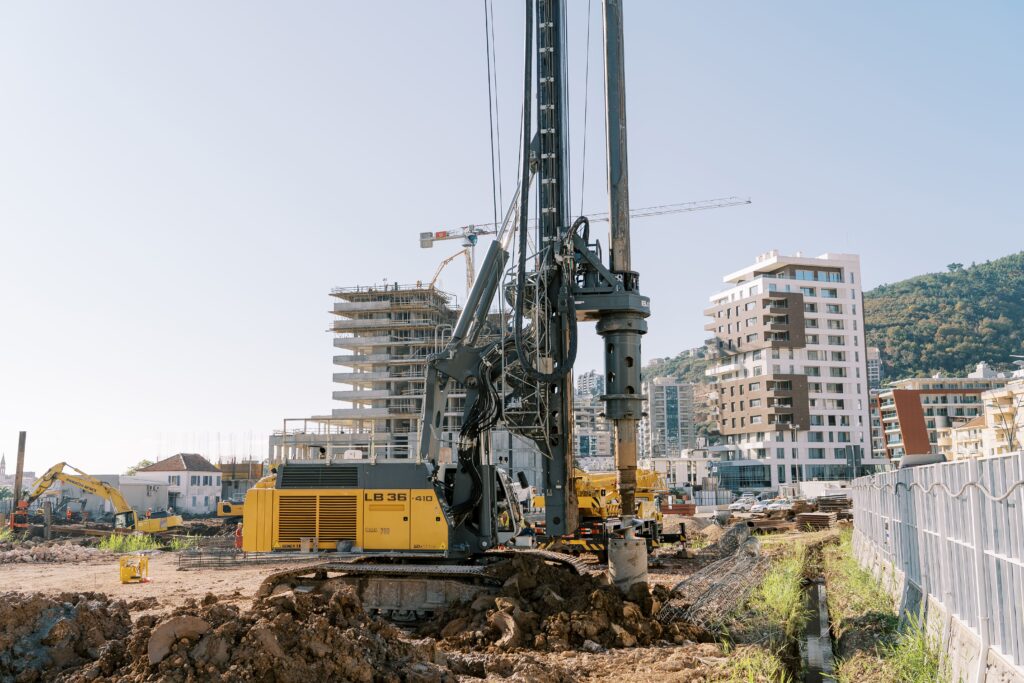
- Foundation engineering – designing the systems that transfer a structures load safely into the ground.
- Site investigation – drilling, sampling, and testing soil and rock to understand subsurface conditions before design begins.
- Slope stability and earth retention – evaluating and preventing landslides, slope failures, and retaining wall collapses.
A Discipline Built on Uncertainty
Unlike a steel beam, whose properties can be looked up in a table, soil varies from location to location and even within the same site. Because of this, geotechnical engineering leans heavily on field investigation, laboratory testing, and engineering judgment. Engineers gather as much subsurface data as practical, then use established methods to estimate how the ground will behave, always accounting for some degree of uncertainty.
This is part of why geotechnical engineering is often considered as much an applied science as it is a design discipline. It sits at the intersection of geology, physics, and structural design, translating natural, variable ground conditions into safe, buildable engineering solutions.
Continue exploring geotechnical engineering topics on the JMt Engineering homepage.